Create your tour or excursion in the proposed locations.
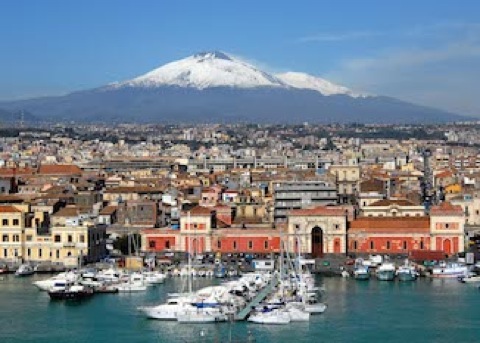
Catania
It is the second largest municipality by population in Sicily
after Palermo and is the center of the largest conurbation in
Sicily. It is one of fifteen Italian metropolitan cities. It is
the tenth Italian city by population and also the town of the
region's most populous non-capital city of Italy. Founded in 729
B.C. by Calcidesi, has a long history characterized by various
rulers whose remains today enrich the artistic, architectural and
cultural heritage. Under the Aragonese dynasty was the capital of
the Kingdom of Sicily. In the course of its history has been
repeatedly affected by volcanic eruptions (the most impressive, in
historical times, is that of 1669) and earthquakes (the most
catastrophic remembered were those of 1169 and 1693). The baroque
old town is a UNESCO World Heritage Site, along with the seven
municipalities of the Val di Noto (Caltagirone, Militello in Val
di Catania, Modica, Noto, Palazzolo Acreide, Ragusa and Scicli) in
2002.
Riviera dei Ciclopi (Acireale – Aci Castello e Acitrezza)
The name of a shepherd by the name of Aci, Galatea love, graceful
nymph who lived in the woods on the slopes of Etna, is the theme
of this territory located near the coast of the Ionian sea and
rugged lava. Acireale, Acicastello and Acitrezza, remember the
name of the young man, who was killed out of jealousy by
Polyphemus, who was turned into a river by the piety of Neptune to
be able to still meet with the love. The Cyclops Riviera is
characterized by a lava coast, created with the countless
eruptions of Etna, overlooking a deep sea and transparent. The
coast line is arched near Acireale, where it reaches a height of
120 feet above the sea, taking the name of "Timpa". Then back down
again, always with his rough appearance blackish, and is
remembered as the Riviera of the lemons because of the
extraordinary spectacle of lush citrus visible on the sides of the
road. Fishing village, it should be visited the ancient medieval
manor house, which includes a Museum with archaeological finds
from the Palaeolithic to the Middle Ages and a collection of
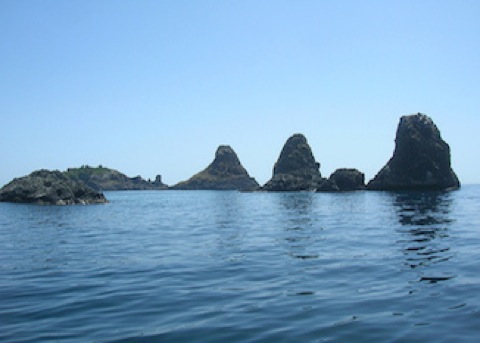
minerals. From its terraces you can see the village of Acitrezza,
in front of which emerge from the sea stacks, tall, pointy rocks
of black basalt, together with the island Lachea.
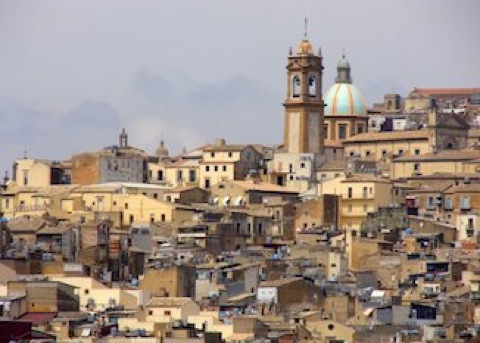
Caltagirone
Its ancient origin is attested by finds and numismatic and
artistic documents that reveal it as one of many cities sicane or
Sicilian or Sicilian-greek. Even in the territory have found coins
Greek and Sicilian, in addition to the rich ceramic and metallic
which is located at the Archaeological Museum of Syracuse, the
Civic Museums and the Museum of Ceramics of Caltagirone.
Caltagirone is located 611 meters on a top of Erei that grow from
the center of Sicily to the south-east, both bind right here with
Hyblaean. There are numerous events, religious or otherwise, that
take place in the city, highlighting the baroque look and
scenographic. Among all included: "La Scala Flower Festival", held
on the third Sunday of May and consisting of a large design made
with flower pots along the 142 steps of the Scala di Santa Maria
del Monte in honor of Our Lady of condominiums which is celebrated
on 31 May with the "Rusedda" procession involving the Sicilian
carts and tractors decorated; the Feast of the Patron St. James,
July 25, which is the most important religious feast of the city,
with a solemn Mass, procession and parade of the Senate Civic in
eighteenth-century costumes. And for those who want to deepen
their knowledge of the art of ceramics in Caltagirone is also a
real Museum of Ceramics. It is therefore worthwhile to visit this
city where over time you renew your precious gift of creating art
works of admirable beauty, using as raw material the only elements
that God has given us: earth, water, fire and air.
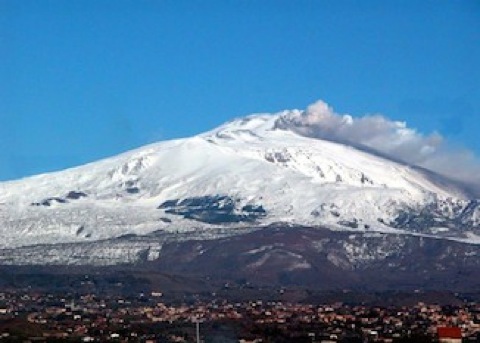
Monte Etna
Etna Park stands out not only for the charm of the lava flows that
constantly change and mark his territory, in fact, the whole area
is also made unique by a universe of plants that composes and
decomposes all the colors in the palette of Mother Nature from
shades of green in the vineyards below, the yellow apple orchards
and oak and chestnut forests as you ascend further, to the dark
colors of the woods of beech and birch trees begin to shut out the
light and then allow the force to take possession of the volcano
of all the available space, up there where the clouds caress the
lava ejected from the bowels of the Earth. Here, in the woods of
oaks and ferns, there are extraordinary forms of life that feed on
what the fire giant can afford to grow on the slopes. Here you can
still find animals like wild cats, foxes, porcupines, weasels,
dormice, just to name a few types of fauna specimens, because the
true king of these places is the superb golden eagle. Obviously, a
lot of other birds pass through here, the peregrine falcon, the
owl, the hawk for the heron and wild pigeons.
Noto
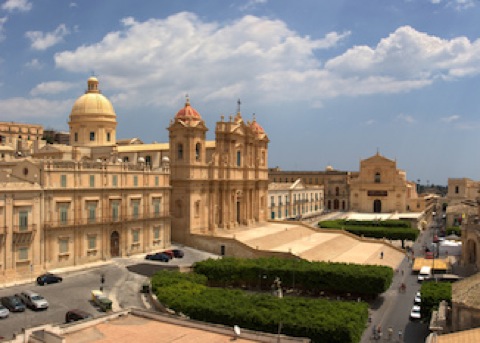
Noto is believed to have been founded by people Sicani, at the
time of the fall of Troy. The story of Noto was determined not so
much by men as by nature: in 1693 it was destroyed by the
earthquake that struck the south-western part of Sicily. Conceived
as a large theater without wings, as a vibrant and flowing, Noto
returned to life, sumptuous and superb hillside Meti. The
architectural history of the new city were dominated by three
architects, Rosario Gagliardi, Vincenzo Sinatra and Paul Labisi,
who have managed to develop an incredible masterpiece that shows
the architectural unity. The triumphal arch, along the main path,
marks the beginning of the city. Surmounted by three symbolic
sculptures
- A crenellated tower (power)
- A dog (fidelity)
- A pelican (sacrifice).
The gate was built in typical real golden limestone used in the
previous century to build churches and palaces of the city.
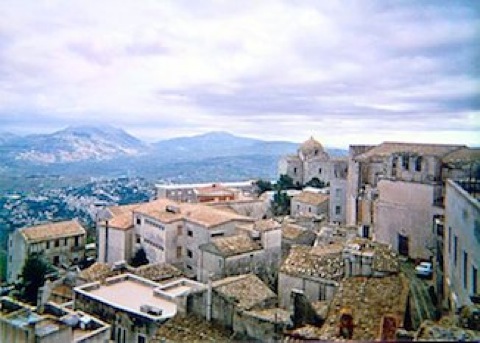
Castelmola
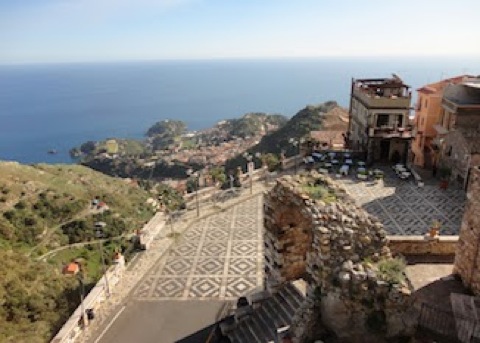
The perched village of Castelmola worth a careful visit. Located
on the rock overlooking Taormina and the opportunity to enjoy an
even broader view, overlooking the coast which extends south to
the majestic volcano Etna and Catania, enchants with its narrow
streets and buildings typical of a medieval structure. We
recommend a trip to the Caffè Turrisi, unique not only for the
serving of almond wine but also for its riotous peculiarities
secret that will not reveal but we invite you to discover for
yourself.
Agrigento
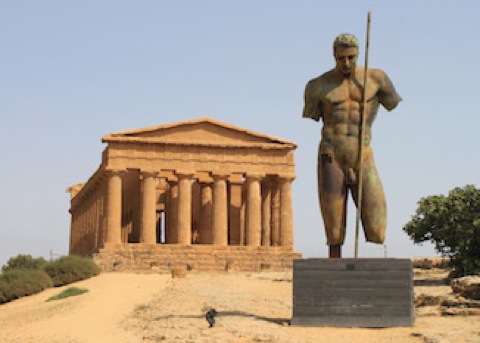
The Temple of Concordia can be seen just peeking out from the
southern end of this plain which is green and covered with
flowers; some remains of the temple of Juno can be seen if you
look toward the east; the ruins of all the sacred buildings are in
the same line of the temples of the above." Even today, only a
small part of the landscape, admired by Goethe in 1787, has
changed and the Valley of the Temples is the most popular and
praised part of Agrigento. Inside the Valley of the Temples there
are several monuments; they are what remains of the ancient city
of Akragas, which was founded in the sixth century BC by settlers
who came from Gela thus becoming, in a hundred years, "the most
beautiful city of mortals" (Pindaro). Destroyed by the
Carthaginians in 406, was refounded by Timoleontesin 340 BC and
has had new moments of brilliance, even if he was heading for the
decline, which has become final with the Byzantines. The old part
of the city was abandoned in the ninth century, after the Arab
conquest, and the urban core was limited to a hill above who took
the name of Gergent. Then it was conquered by the Normans, the
city became a diocese and several churches were built in it.
Buildings and monuments were built during the fourteenth and
fifteenth centuries and again during a period included between the
seventeenth and eighteenth centuries. In 1927, the city took the
name of Agrigento and today has 56,000 inhabitants. You need a
whole day to visit the city.
Taormina
His fortune began in the nineteenth century, when, after a visit
to Goethe, who praised its beauty throughout Europe, it has become
almost a must in the "Grand Tour". One of the most important
monuments is the Teatro Antico, not only for its artistic value,
but also for its picturesque location. The panorama from above has
been defined as "something to do" once you are in Sicily. It is
the second largest ancient theater of the island (109m diameter).
Modified and extended around 300 years later, was used by the
Romans for gladiatorial combat. The theater nowadays is used for
musical and theatrical performances during the summer. The Romans
also built the Odeon, a small building behind the church of Santa
Caterina, and Naumachia, a large terrace of protection, with a
cistern no longer exists. It seems that the naval battles took
place there. Corvaja Palace, built in the fifteenth century was
the seat of the Sicilian Parliament in 1410 on the first floor
there are large windows with double mullioned window. The inner
courtyard is very picturesque. The Cathedral, dedicated to St.
Nicholas, was built in the thirteenth century. The main portal,
surmounted by a small rose window and flanked by two ogival
mullioned windows, was made in 1636 in the Renaissance style; two
portals, the fifteenth and sixteenth centuries, are respectively
on the left and right sides. The interior has three naves; There
are interesting paintings by Antonino Giuffrè (1436) and a
polyptych by Antonello de Saliba (1504). The elegant palace of the
Dukes of Santo Stefano, built in the fourteenth and fifteenth
centuries, is a fine example of Sicilian architecture.
Ragusa - Ibla
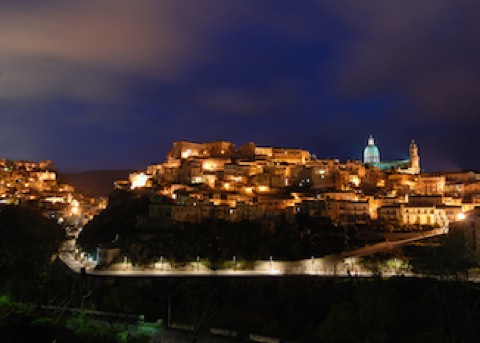
The city of Ragusa boasts ancient origins. The hill of Ibla was in
fact inhabited since the fourteenth century BC by the Sicilians
who left numerous archeological finds in the area (oven tombs,
caves dug into the rock. etc ...). From this city passed Greeks,
Romans, Dalmatians, Byzantines, Arabs, nonrnanni and Aragonese,
who all have helped to forge a cultural retrotenra thick. The city
was virtually destroyed by the terrible earthquake that struck 693
in the whole central-eastern Sicily. Reconstruction began almost
immediately, "giving birth" two cities; in fact, the nobles
(sangiorgiani) preferred to rebuild on the same site before, while
the middle class (sangivannari) wanted to build on the nearby hill
of Patro. It is for this reason that we know that Ragusa is
characterized by two urban centers (independent until 1926)
practically distinct from the eastern spur is anroccata Ibla which
topographical features and urban array of medieval, while to the
west (the hill of Patro) is Ragusa develops, characterized by a
system more modemo and greater regularity planimetric accentuated
by large orthogonal axes. The reconstruction, which used the
materials offered by the very nature of the sites (basalt lava and
white stone), gave birth to the jewels of the "flowery baroque"
that only rich because of a kind of joyful imagination in 2002 was
recognized by 'Unesco world heritage site.
Siracusa
Syracuse was founded in 734 BC by colonists from Corinth. It was
one of the largest and most powerful city in the Mediterranean,
embellished with temples, palaces, gardens and fountains. It was
an ideal city according to Plato, who visited several times,
putting it in his hopes for political and social renewal. It was a
magnificent city according to Simonides, Pindar, Bacchylides and
Aeschylus, who sang her beauty. The Greek Theatre - is the most
perfect example of theater architecture which has come down to us
and it was one of the largest theaters in the world greek
(diameter 138.6 m). We have notices of it from the fifth century
BC, when Syracuse was already one of the most important cultural
centers of the Mediterranean. Artistic heritage - Ortigia Temple
of Apollo and Artemis - dates back to the seventh century BC and
is the oldest greek temple in Sicily. Over the centuries it became
a Byzantine church, then a mosque and a Christian basilica. The
temple was Doric and show some peculiarities due to its antiquity.
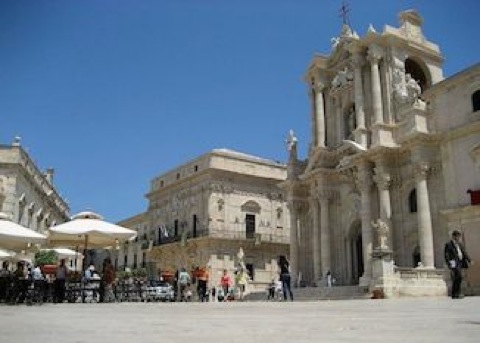
The Cathedral - is in Piazza Duomo, surrounded by elegant Baroque
palaces set in an ancient sacred area. The cathedral is the result
of successive transformations made to the great temple of
Athena, built probably by Diomenides, the family founded by Gelon,
the first tyrant of Syracuse. Its magnificence has been celebrated
by Cicero. Its doors are made of gold and ivory. On its summit
shone the golden shield of Athena. The Fountain of Arethusa - In a
square overlooking the sea, this small fountain, inhabited by
ducks and white surrounded by slender papyri, is the symbol of the
relationship between Syracuse and the mother city Corinth. Maniace
Castle - It rises imposingly on the seafront of Ortigia. It was
built by Frederick II in 1239 The castle, which combines military
architecture with the elegance of a court, it still retains the
outer structure of the thirteenth century, a square, with massive
corner towers. The Latomies - These are the quarries from which it
was obtained the material that was used to build Syracuse. The
most interesting is the Latomia paradise, nestled in a lush
garden. In it there is the so called "Ear Dionysius", a large
artificial cave in which there is an extraordinary acoustic effect
of amplification.
Piazza Armerina
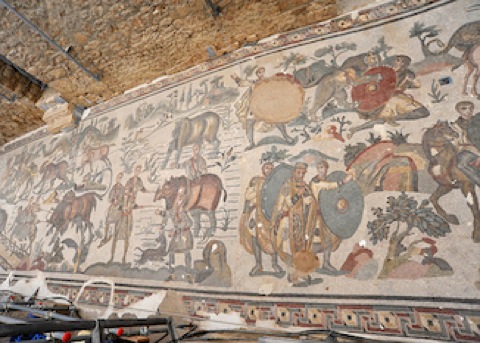
Piazza Armerina is linked to the Roman Villa of Casale, one of the
most important archaeological discoveries of Sicily. It was built
in the third or fourth century dC by an unknown customer. Whoever
it was, the owner of the villa was a very rich man, who loved
luxury, convenience, and art. For the decoration of its
prestigious country residence that had good mosaic artists who
came from Africa for five years and are dedicated to creating
beautiful mosaics that still give us a vivid picture of Roman life
and mythology. Covering an area of about 3,500 square meters,
there is a sequence of scenes of hunting and dancing, mythological
characters and animals, fishing and all kinds of plants and
fruits, models, and leader of a style of mosaics in the following
centuries it spread in Italy, France and Spain. Centuries later,
Arabs and Normans have lived within these walls, making any
changes they thought were necessary to adapt the villa for your
needs, but unfortunately damaged the original structure. In the
twelfth century a terrible flood caused a river of mud that, after
invading the valley, destroyed the upper part of the villa. The
sludge from a side destroyed the ceilings, which must have been
splendid, secondly protected the mosaics. In 1950, the villa has
been restored under the guidance of the archaeologist Gino
Gentile. The complex consists of four separate groups of
buildings, each used for different functions of social life,
hospitality, rest, etc.. Under the earth there are still the
servants' quarters, stables, warehouses and other buildings. Of
particular interest are the baths, which were composed of
different environments, and that, in addition to the mosaics, show
traces of the system used to supply water to the Villa; the room
of the ten gymnasts with ten women who play various sports
activities; the apartments of the ladies of the house, in which,
among other things, there is a decoration that shows Odysseus and
Polyphemus and the famous "erotic scene."
Palermo
Palermo is a city of contrasts for excellence. Here you can find
the foods served in the poorest the most elegant tables or you can
eat kebap and stigghiole at any time of the day or night. Visiting
the city's main streets, you can admire the palaces, tangible
evidence of an ancient pomp, behind which lies a maze of alleys
and courtyards of houses huddled together. Palermo is also chaos
smoke roast on Sunday morning, machines in columns behind
horse-drawn carriages, street vendors sfincione. But it is also a
bourgeois city, elegant and somewhat reserved. Perhaps a legacy of
the many noble families who lived and those who, even today,
retain the title in waiting for the "Real" di Savoia come back to
visit the city. Palermo is the hot sirocco sky tinged with yellow,
but also humid evenings in which it spreads a light scent of
orange, jasmine and Pomelie. This is the ancient Panhormus, the
city "all port", set in the Conca d'Oro, the beautiful plain
surrounded on three sides by mountains and protected from Monte
Pellegrino. Palermo has remained over the centuries a multiethnic
and multicultural city, thanks to its ability to accommodate,
without erasing the traces, the legacy of the rulers who have
followed. A tangible sign of this peculiarity you may have through
the many city markets. The most famous is certainly the Vucciria.
The historic center of Palermo has its heart in the octagonal
square Vigliena, better known as the Quattro Canti, and symbolic
geometric center of Palermo, founded in 1600 the Royal Palace,
called "Norman" because it reached its maximum splendor in the
Norman period . The castle has several rooms full of fabulous
mosaics, such as the Sala dei Venti, and Sala d'Ercole, which
still gathers the Sicilian Parliament. Inside the palace stands
the Palatine Chapel, a splendid example of harmony between
different cultures who lived in Sicily, where you can admire the
Byzantine mosaics, the wooden ceilings inlaid by the Arabs and the
sculptural masterpiece of Easter candelabrum made by craftsmen
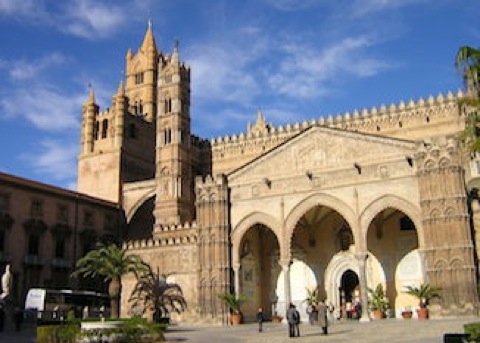
Palermo. Continuing towards the sea meets the left, closed between
the two towers, the majestic Cathedral, the testimony of various
eras and styles in conflict with each other.
Trapani
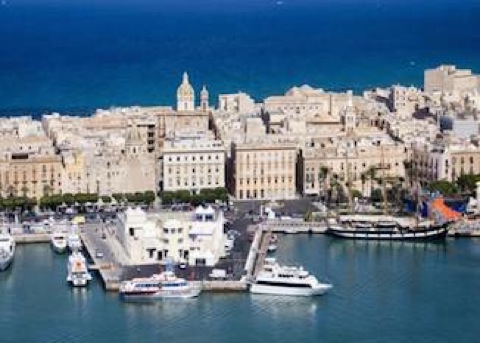
A sunset orange, whole Mediterranean, and the skyline in which a
distinction is clearly a windmill in the vegetation of the salt
marshes. Postcard scenery, one of the many snapshots coming from
Trapani, a city in eastern Sicily. The ashlar Jewish Palazzo della
Giudecca and the city that extends into the water, view from Mount
Erice, are other suggestions of a reality also famous for sailing
regattas, to the slaughter of tuna and also be a port convenient
for Favignana, Levanzo and Marettimo, the three islands of the
Aegean archipelago. A city that has taken so much from the sea and
the sea has also paid duty, by virtue of the numerous invasions:
the Carthaginians, coming from the African coast, to the Romans,
until you get to the Arabs and the Aragonese. Many conquistadores
and their many tracks, Trapani holds that as the memory of old age
and puts on display. Arabs example is the landscape of salt
marshes: expanses of brackish water towers and a windmill that was
used for grinding salt. Sights to see and photograph, just like
the Castle Dovecote, fortification which over the years has
changed functions and uses, and which today continues to be one of
the five towers that symbolize the city.
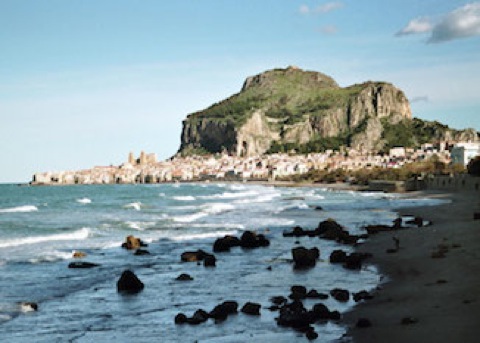
Cefalù
Due to the strategic importance of the place, protected by an
imposing rock, as well as the fertility of the land, the people
settled in the area from ancient times. However, the urban history
of the place began only in the fifth century aC. The name of the
Cephaloedium settlement, that is, "head", is given by the fact
that the citadel had a dominant position, in fact the term "head"
is used because of the shape of the rock is located in the citadel
same. Cefalu has gone through a period of prosperity in the course
of the fifteenth century, a period in which it was interrupted by
a period of decline in the nineteenth century, from which he has
recovered in recent decades, thanks to the booming tourism
industry. The Cathedral (Transfiguration of Our Lord) was founded
in 1130 This is without a doubt one of the most beautiful
cathedrals in the world, a perfect example of the Romanesque style
southern. An important feature of the facade are the two angular
towers added in 1240.
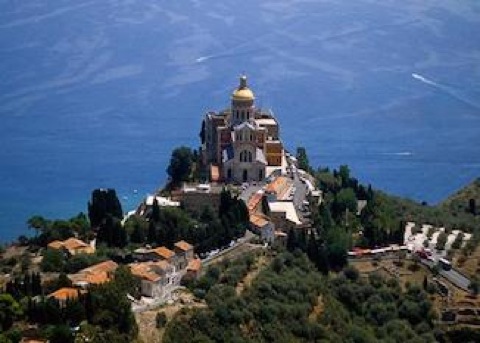
Tindari
Tindari is one of the oldest settlements on the coast of Messina,
its foundation dates back to 396 aC the will of the tyrant
Dionysius, who wanted to give her the name of Tyndaris devotion to
the Dioscuri. Tindari is therefore rich in archaeological remains
from the Greek era, are still visible walls, the InsulaRomana an
entire neighborhood with spa, housing and a patrician house with
splendid remains of mosaics. Tindari also houses a theater of
Greek origin suggestively built to have the extraordinary scenes
with the background sea of the Aeolian Islands. It is currently
used for performances of an artistic nature. Impressive: the
Shrine of the Black Madonna, constantly pilgrimage to the foot of
the fortress of the sanctuary is possible to admire the unique
sight of Marinello lakes, a lagoon formed by seven natural pools
that form spectacular shapes in the sand.
Erice
On top of Mount namesake, on the extreme west coast of Sicily,
overlooking the city of Trapani and the sea which reflect, on the
one hand the Egadi Islands, the other the Monte Cofano, lies the
town of Erice. On a plateau whose fortress culminating reaches 751
meters (above sea level), the village remains almost intact its
medieval appearance: the cobbled streets to the stone walls,
almost always a protection from the external looks of flowering
courtyards which takes place in family life , the feeling you
have, along the threads that make up the paved ericini, is an
immersion in the remote past. And, in a tone of gray and the
other, you discover evidence of an epoch or another, from the
Baroque to the balcony of the majestic Gothic church mother, the
powerful Norman architecture lines fifteenth... The magnificent
panoramas from any side you look out, they appear to the visitor -
backdrops to the cliffs that surround the cliff - are truly
breathtaking: on the one hand, Trapani, salt marshes, Egadi
Islands, Marsala and further south, if the weather permitting,
even Pantelleria, black pearl in the Strait of Sicily and Cape Bon
in Tunisia; the other, the Tyrrhenian Sea, the Gulf of
Castellammare, the coast arriving in San Vito lo Capo and over
again, until Ustica.
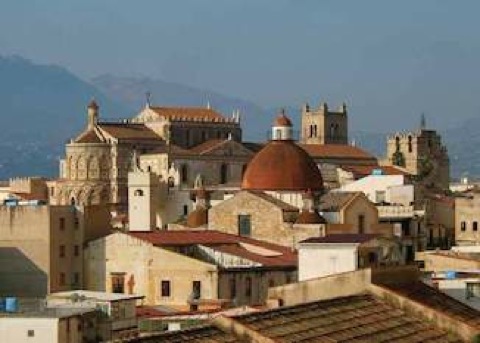
Monreale
At about 8 km from Palermo, in the town of Monreale, located in
the beautiful Arab-Norman style cathedral dedicated to the Virgin
Mary. The imposing building was built in 1174 at the behest of the
Norman King William II as a result of the Madonna appeared in a
dream and asked him to build a temple in his honor. The Cathedral
is a porch outside with a three-light window beneath which there
is a fine bronze portal by Bonanno Pisano, and two large square
towers, one of which turned into a belfry. The interior has a
Latin cross is divided into three naves divided by columns topped
by beautifully carved capitals; the walls are covered with
magnificent mosaics with gold backgrounds of the Byzantine school
(XII and XIII sec.) depicting scenes from the Bible and stories of
the church. Among the many treasures stored there deserve mention:
the altar by the silversmith Valadier (1711), the sarcophagi of
William I and William II, the organ keyboards to six of the
twentieth century. Do not miss the Chapel of the Crucifix, an
example of Sicilian Baroque, which guards the treasure of the
cathedral with the reliquary containing a thorn from Christ's
crown. Also worth visiting is the cloister arcade of the
Benedictine monastery (XII sec.) Next to the cathedral to admire
the rich decoration of the capitals of the columns stained.
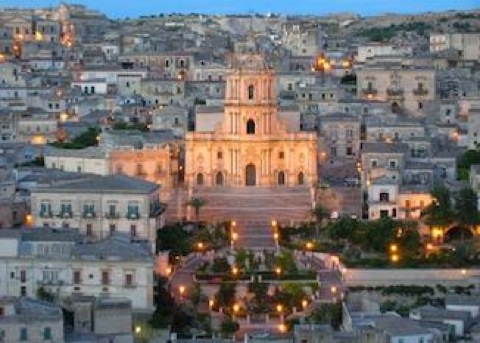
Modica
Modica is one of the most picturesque cities of the province of
Sicily. It is located in the southern area of the Iblean mountains
and is divided into two areas: Modica Alta, whose buildings are
almost climbing the mountain rocks, and Modica Bassa, down in the
valley, where once two rivers Ianni Mauro and Pozzo dei pruni,
then covered because of frequent floods, and where it is now the
Corso Umberto, the main street and historic center of the city.
The aspect is mainly the late Baroque, dating back to the
aftermath of the earthquake (1693). What makes the city so unique
and fascinating is, first of all, the baroque aspect, of which the
urban design and historic center of Modica abound; also the
presence of violet and picturesque narrow streets, full of old
shops, huts or rich palaces. It's a great little town, rich in
historical and artistic, easily visited on a weekend. I'm sure to
see the church of San Giorgio, a wonderful church in Sicilian
baroque style. Of great value is then also the church of San
Pietro which has beautiful especially the huge staircase that lies
ahead with all the statues of the apostles. Next to the church and
the stairs leading to the castle of the Counts and the Clock
Tower, you arrive at the church of St. Nicholas Lower, symbol of
rock-cut architecture (very nice frescoes inside).